
Start Here
Developmental Archetypes vs. Jungian Archetypes
If you searched for archetypes and got Carl Jung, you're in the right place for the other half of the story. Here's what Jung meant, what a developmental archetype is, and why they aren't the same thing.
The short answer
A Jungian archetype is a universal pattern that every human is thought to carry, like the Mother, the Hero or the Shadow. A developmental archetype is a pattern you built in response to how you were raised, and it differs from person to person.
Jung's archetypes describe what is shared across all of us. Developmental archetypes describe what is particular to you: whether you grew up harder or softer, and whether you learned to survive through your own strength or through other people.
What Jung meant by an archetype
Carl Jung (1875 to 1961) was a Swiss psychiatrist and the founder of analytical psychology. He proposed that beneath each person's private memories lies a shared layer he called the collective unconscious, made of inherited patterns that show up across myth, religion, art and dreams. Those patterns are the archetypes.
He wrote about several in particular: the Persona (the face we present), the Shadow (what we disown), the Anima and Animus (the inner feminine in a man and the inner masculine in a woman), and the Self (the whole). He described the lifelong task of integrating them as individuation. He never settled on a fixed list or a fixed number.
The popular "12 archetypes" are not Jung's
If you've seen a chart with the Innocent, the Orphan, the Hero, the Caregiver, the Explorer, the Rebel, the Lover, the Creator, the Jester, the Sage, the Magician and the Ruler, that is a branding model. It comes from Margaret Mark and Carol Pearson's 2001 book The Hero and the Outlaw, which was inspired by Jung but is a separate, later system built for marketing.
That's one reason the word is so crowded. "Archetype" can mean Jung's universal patterns, a brand framework, a character type in fiction, or a personality quiz result.
What a developmental archetype is
Developmental Archetypes are the framework behind Fate & Flow. They describe four formations, built in childhood: the Forger, the Manifestor, the Warrioress and the Starlet. Each is defined by two questions. Did you grow up harder or softer? And did you learn to survive through self-reliance, or through other people?
The answers give four combinations. The Forger and the Warrioress took the hard, self-reliant road. The Manifestor and the Starlet took the soft, relational one. Each has a native strength, a shadow it falls into when it's running on survival instead of choice, and a path forward.
Side by side
| Question | Jungian archetypes | Developmental archetypes |
|---|---|---|
| Where does it come from? | An inherited layer shared by all people, the collective unconscious. | Early life: how you were raised and what you learned to do to feel safe. |
| How many are there? | No fixed list. Jung named several and never set a number. | Four archetypes, each with seven formations inside it. |
| Does it differ between people? | The archetypes are universal. People relate to them differently. | Yes. It describes a pattern specific to you. |
| Can it change? | The structures are permanent. Your relationship to them develops over a lifetime. | It is a starting point. The work is integration, and your present state is measured separately. |
| What is it for? | Understanding symbols, dreams, myth and the psyche. | Understanding your own patterns and what to practice next. |
Jung asks what is true of every human. Developmental archetypes ask what is true of you, and what you can do about it.
Where the two meet
The two systems share some language, and we'd rather say so than hide it. The Shadow and the Anima and Animus are Jung's ideas, and they inform how this framework talks about what a formation leaves undeveloped. Developmental Archetypes is its own, newer framework. It does not claim Jung's authority or his endorsement, and it should be read as a different tool for a different question.
A Forger working toward integration is, in Jung's terms, doing something like individuation: recovering the part that was set aside to survive. The difference is the starting point. Jung begins with the universal. This begins with how you actually grew up.
A word on evidence and limits
Neither approach is a clinical diagnosis, and neither is a settled science. Jung's concepts have shaped therapy, literature and culture, though they aren't tested the way modern trait research is. Developmental Archetypes is a reflective tool. It works best as a mirror that helps you notice a pattern you already half-recognize.
It is not a substitute for therapy or medical care. If something here lands hard, that's a good reason to talk to someone you trust or a licensed professional.
If you arrived from Human Design
Human Design uses the word Manifestor for one of its energy types. That's a different system with a different meaning. The Manifestor here is a developmental formation: an inward, dreaming person who feels deeply and is still building the structure to ground it.
Meet the four
Each profile covers the archetype's traits, its shadow, and the path forward. The quiz places you in one of them, and then in one of seven formations within it.
 The ForgerSeeking the Inner ChildA structured, stoic man who learned to prioritize action and self-reliance over emotional vulnerability.
 The ManifestorSeeking the Outer AdultAn internal, dreaming man who lives close to his Anima, possessing deep sensitivity and creativity.
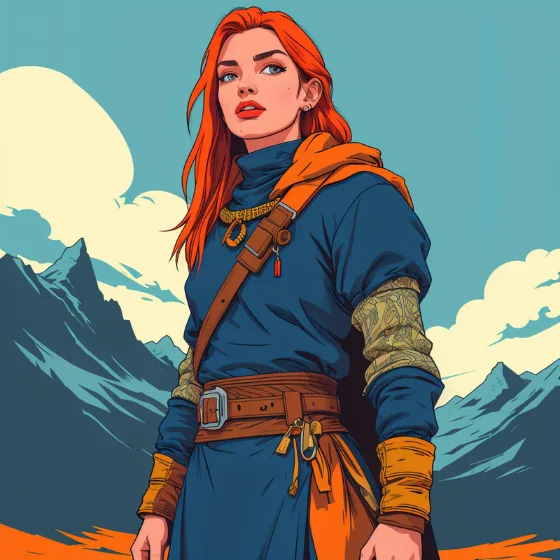 The WarrioressSeeking the Outer ChildA competent, independent woman forged in the absence of softness, on a journey to reclaim her receptivity.
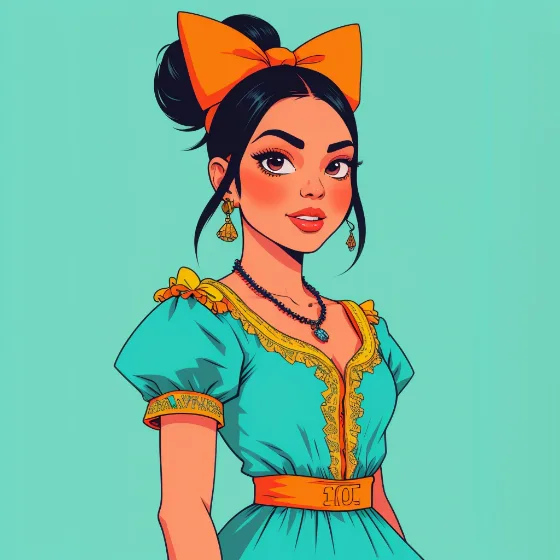 The StarletSeeking the Inner AdultAn emotionally expressive woman seeking protection and containment while building her own inner stability.